
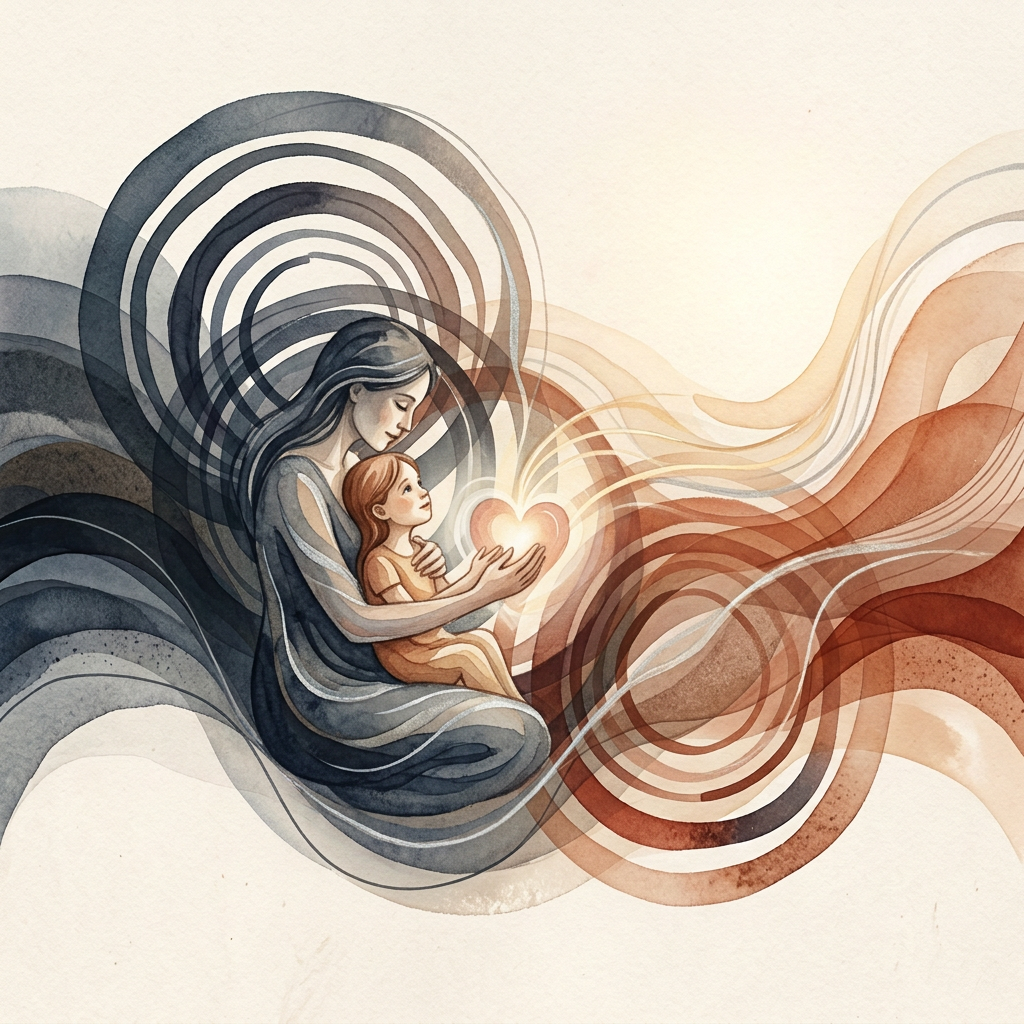
When people hear the word trauma, they often think about a single devastating event—a serious accident, abuse, natural disaster, or other experience that overwhelms a person’s ability to cope.
But trauma can also develop in quieter ways.
Sometimes the wounds we carry come from what happened repeatedly—or what was missing—during our earliest relationships. Maybe you weren’t consistently protected, understood, encouraged, or emotionally supported. Maybe you learned that your feelings were too much, your needs were inconvenient, or that keeping the peace was more important than being yourself.
These experiences can shape the way we see ourselves and the way we relate to other people long after childhood has ended.
This is one of the ideas explored through Developmental and Relational Trauma Therapy (DARTT), a model developed by Jan Bergstrom and Rick Butts through their work with the Healing Our Core Issues Institute (HOCI).
What is developmental and relational trauma?
Developmental trauma refers to wounds that can occur as we grow and develop within our families and other important relationships.
Children depend on the adults around them. They need protection, connection, guidance, acceptance, and appropriate boundaries. They also need room to develop their own identity, needs, feelings, and sense of self.
No parent does this perfectly. In fact, there is no such thing as a perfect childhood or a perfect parent.
But when important needs are repeatedly unmet—or when a child has to adapt significantly to the emotional environment around them—those experiences can influence development.
For example, a child might learn:
- “My feelings aren’t important.”
- “I have to take care of everyone else.”
- “I can’t say no.”
- “I have to be perfect to be valued.”
- “Other people’s emotions are my responsibility.”
- “It’s safer not to need anything.”
- “I can’t trust people.”
- “Something is wrong with me.”
A child doesn’t necessarily think these things consciously. Instead, these lessons can become part of the way the child learns to navigate relationships and the world.
Over time, developmental wounds can become relational patterns.
The ways we learned to survive, connect, protect ourselves, and find acceptance as children can influence how we function as adults.
Developmental trauma often shows up in relationships
One reason developmental trauma can be difficult to recognize is that the original circumstances may be long gone.
You may be an adult with a career, a family, and a life that looks completely different from your childhood—and yet find yourself repeatedly struggling with things like:
- Fear of rejection or abandonment
- Difficulty trusting others
- Difficulty setting boundaries
- People-pleasing
- Shame or a persistent sense of inadequacy
- Perfectionism
- Difficulty identifying your own needs
- Feeling responsible for other people’s emotions
- Becoming overwhelmed during conflict
- Shutting down emotionally
- Difficulty receiving care or affection
- Repeating unhealthy relationship patterns
- Feeling disconnected from yourself or others
These struggles don’t necessarily mean that something is “wrong” with you.
Often, they make sense when viewed in the context of what you learned early in life.
The goal isn’t to blame your parents or spend your life looking backward.
The goal is to understand your story well enough to have more freedom in the present.
The connection between developmental and relational trauma
Developmental and relational trauma are closely connected because much of our development happens in relationship.
We learn about ourselves through our relationships with caregivers.
We learn whether we are worthy of care.
We learn whether our needs matter.
We learn whether other people can be trusted.
We learn how to handle conflict.
We learn what happens when we express anger, sadness, fear, or disappointment.
And we develop strategies for getting our needs met—or for learning to live without them being met.
Those strategies may have been helpful when we were young.
But something that helped a child survive a difficult environment may not serve an adult well.
For example, staying quiet may have helped a child avoid conflict. As an adult, however, that same strategy can make it difficult to communicate honestly with a partner.
Learning to anticipate a parent’s moods may have helped a child feel safe. As an adult, that same hyper-awareness can lead to constantly monitoring a partner’s emotions.
Being exceptionally responsible may have earned approval as a child. As an adult, it can become perfectionism, exhaustion, or difficulty allowing other people to help.
The question isn’t simply, “Why do I do this?”
A more helpful question can be:
“What did I learn to do, and why did I need to learn it?”
What is Developmental and Relational Trauma Therapy?
Developmental and Relational Trauma Therapy, or DARTT, is part of the Healing Our Core Issues (HOCI) model developed by Jan Bergstrom and Rick Butts.
Their approach draws from several areas of therapeutic thought, including attachment theory, mindfulness, somatic or body-based approaches, and the core-issues work associated with Pia Mellody.
Rather than focusing only on what happened, DARTT explores how a person’s developmental and relational experiences shaped the way they experience themselves, other people, and the world.
This can include exploring experiences from childhood and identifying the ways those experiences continue to influence adult life.
The model includes three major experiential processes:
- Getting Your Story Straight
- Re-Parenting Your Historical Selves
- Standing in Your Truth
These processes are designed to help people understand their developmental and relational experiences, develop greater awareness of their internal experience, and begin responding differently in the present.
Getting Your Story Straight
Healing often begins with understanding.
Many people have a general sense that their childhood was “fine” or “not that bad,” but have never really examined how their experiences affected them.
Getting your story straight isn’t about creating a case against your parents.
It is about becoming more honest and compassionate about what you experienced.
What happened?
What didn’t happen?
What did you need?
What did you learn?
How did you adapt?
And how might those adaptations still be affecting your life today?
Sometimes putting words to these experiences can bring a sense of clarity:
“Of course I struggle to ask for help. I learned early that my needs were a burden.”
“Of course conflict feels threatening. I learned that disagreement could lead to rejection.”
“Of course I have trouble trusting people. I learned that the people I depended on weren’t always emotionally available.”
Understanding doesn’t erase responsibility.
Instead, understanding can create a starting point for change.
Re-parenting your historical selves
One of the distinctive concepts within this approach involves working with the different “selves” that developed throughout a person’s history.
The younger parts of us don’t simply disappear when we become adults.
A part of you may still carry the fear, shame, anger, loneliness, or unmet needs that developed earlier in life.
Re-parenting doesn’t mean pretending that the past didn’t happen.
It means developing a healthier relationship with those parts of yourself.
Instead of responding to yourself with criticism—
“Why am I still like this?”
—you can begin responding with greater understanding:
“Something in me learned that this was necessary. What does that part of me need now?”
This creates room for compassion without removing responsibility.
Standing in your truth
Healing isn’t simply about understanding the past.
Ultimately, it involves living differently in the present.
Standing in your truth means becoming more able to recognize and honor your reality—including your feelings, needs, values, limits, and choices.
That might mean saying no.
It might mean acknowledging that something hurts.
It might mean allowing yourself to have needs.
It might mean setting a boundary.
It might mean expressing an opinion even when someone else disagrees.
Or it might mean taking responsibility for something you have done without allowing shame to define who you are.
In other words, healing involves becoming increasingly able to live from a grounded sense of who you are rather than automatically responding from old survival patterns.
Why this matters for adult relationships
Developmental and relational trauma can have a profound impact on intimate relationships.
When we enter a close relationship, our history comes with us.
Our partner may unintentionally touch places in us that were shaped long before we met.
A disagreement about money might activate an old fear of instability.
A partner needing space might trigger feelings of abandonment.
A request for change might feel like rejection.
A partner’s disappointment might trigger overwhelming shame.
Understanding these connections doesn’t mean that every relationship problem is caused by childhood trauma.
It also doesn’t mean that our partners are responsible for healing our wounds.
Instead, understanding our developmental history can give us more choices.
We can begin to distinguish between:
What is happening right now?
and
What does this situation remind me of?
That distinction can be incredibly important.
Trauma does not have to be your identity
One of the most hopeful aspects of developmental trauma work is that your history does not have to determine your future.
The patterns you developed had a purpose.
They helped you navigate the world you experienced.
But you are not limited to those patterns forever.
With greater awareness, compassion, and intentional practice, you can learn new ways of relating to yourself and other people.
You can become more comfortable with boundaries.
You can learn to communicate more directly.
You can become more aware of your emotions without being controlled by them.
You can develop a healthier relationship with your needs.
You can begin responding to conflict rather than automatically reacting to it.
And you can develop greater confidence and alignment with your values.
You can understand your past without being trapped by it
Developmental and relational trauma work isn’t about endlessly analyzing childhood.
It is about understanding how your experiences shaped you so that you can have greater freedom in the present.
Your history matters.
But it doesn’t have to be your destiny.
Sometimes healing begins with something as simple as becoming curious about the patterns you carry:
Where did I learn this?
What was I trying to accomplish by responding this way?
Does this strategy still serve me?
What would it look like to respond differently today?
Those questions can open the door to meaningful change.
Developmental and relational trauma counseling in Ohio
In my counseling practice, I use Developmental and Relational Trauma Therapy as one of the approaches that can help clients understand the connection between their history, their sense of self, and their relationships.
For some people, this work is especially relevant when they feel stuck in patterns they understand intellectually but struggle to change.
You don’t have to minimize what happened to you.
And you don’t have to remain defined by it.
Healing can involve understanding where you came from while learning how to live with greater freedom, responsibility, connection, and intention today.
If you’re ready to explore how your past may be affecting your present relationships or sense of self, I’d be glad to help you create room for healing and growth.
References & Further Reading
Bergstrom, J. M. (2025). Gifts from a challenging childhood: Healing the legacy of childhood trauma. Mountain Stream Publishing Company.
Bergstrom, J., & Butts, R. Developmental and Relational Trauma Therapy (DARTT). Healing Our Core Issues Institute.
Bowlby, J. (1988). A Secure Base: Parent-Child Attachment and Healthy Human Development. Routledge.
Mellody, P., Miller, A. W., & Miller, J. K. (1989). Facing Codependence: What It Is, Where It Comes From, How It Sabotages Our Lives. HarperOne.
van der Kolk, B. A. (2014). The Body Keeps the Score: Brain, Mind, and Body in the Healing of Trauma. Viking.
Additional Resources
For more information about Developmental and Relational Trauma Therapy and the Healing Our Core Issues model, visit the Healing Our Core Issues Institute and Jan Bergstrom’s professional resources.